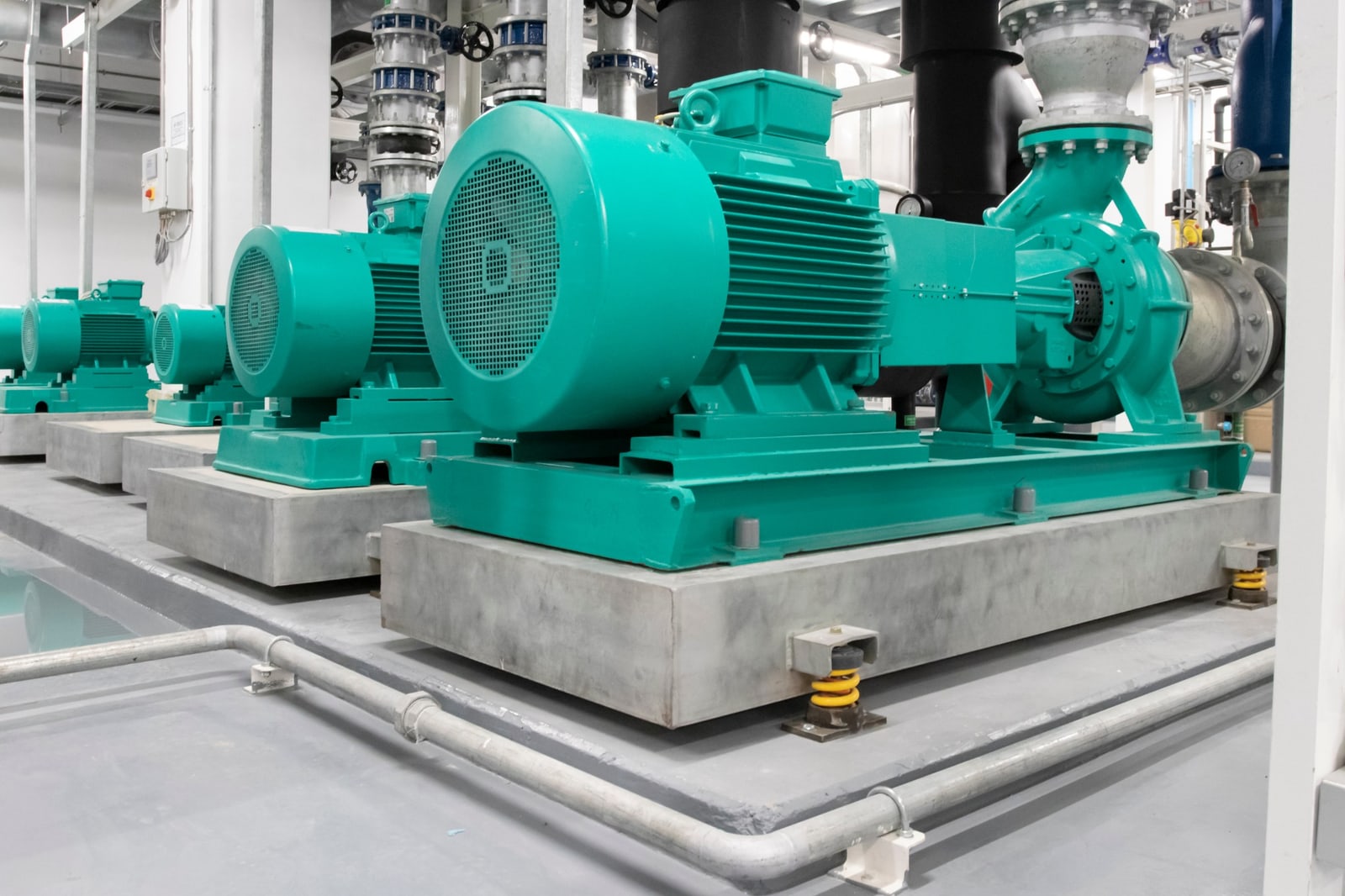
Industrial pumps selected for the duty
Start with the liquid, operating point and installation. Our team helps compare pump technologies, manufacturer options and the service requirements of the complete system.
ANSI process pumps
Horizontal end-suction centrifugal pumps for chemical and general process service, including ANSI/ASME B73.1 designs. Match wetted materials, seal arrangements and the operating point to the liquid.
API process pumps
API 610 configurations for demanding refinery, petrochemical and critical process duties: overhung, between-bearing and vertically suspended designs. Confirm the required edition and project specification during selection.
Industrial centrifugal pumps
Single-stage and multistage, end-suction and split-case options for transfer, circulation and high-head duties. Evaluate flow, total dynamic head, efficiency and available NPSH together.
Vertical pumps
Vertical turbine, in-line, sump and cantilever configurations for the installation and process. Review liquid level, sump geometry, solids, shaft arrangement and service access.
Reciprocating pumps
Plunger and piston designs for high-pressure process service, chemical injection and oil and gas applications. Review pressure pulsation, liquid properties, duty cycle and required capacity.
Rotary positive-displacement pumps
Gear, screw and lobe technologies for viscous liquids, chemical handling and transfer. Select around viscosity, temperature, shear sensitivity, materials and pressure protection.
Pump specifications, curves and construction
Compare representative pump families, then confirm availability with your local Fluid Flow team. Published limits are separate maxima and are not simultaneous operating points. The liquid, selected size, speed and materials determine the final duty, efficiency, seal arrangement and motor rating.
ANSI process pumps · Ruhrpumpen CPP
January 2025 brochure reference: up to 5,000 US GPM (1,135 m³/h), 770 ft (235 m) head and 375 psi (26 bar); 1–8 in discharge flanges. These describe the cited range; additional sizes have separate curves.
ANSI/ASME B73.1 end-suction design. Construction choices include ductile iron/CF8M stainless steel, stainless steel, duplex and Alloy 20. ANSI 150 or 300 RF/FF connections depend on material selection. Packing, single or double seals and a double-row thrust bearing support application-specific configurations.
API process pumps · Ruhrpumpen SCE
Published family limits: up to 14,000 US GPM (3,200 m³/h), 1,575 ft (480 m) head and 1,300 psi (90 bar); 1–12 in discharge flanges.
Single-stage API 610 OH2 design for refinery, petrochemical and heavy chemical service. End-suction/top-discharge layout, enclosed impeller, API material options, oil-ring lubrication and a back-pull-out arrangement. Use the manufacturer's two-pole or four-pole selection chart, then confirm the duty curve, seal plan and driver.
Industrial centrifugal pumps · Ruhrpumpen HSM
Published family limits: up to 2,000 US GPM (454 m³/h), 2,200 ft (670 m) head and 740 psi (51 bar).
Two- or four-stage, axially split, HI-design BB3 pump for high-pressure water, boiler-feed and process duties. Flanged connections, oil-lubricated bearings and a stuffing box for packing or mechanical seals. Published construction options include cast iron, bronze-fitted cast iron, iron-fitted carbon steel and 316 stainless-steel-fitted cast iron.
Vertical pumps · Ruhrpumpen VTP
Published family limits: up to 60,000 US GPM (13,636 m³/h), 2,500 ft (762 m) head and 1,080 psi (74 bar).
Multistage turbine design for wells, sumps and water transfer. Standard construction includes cast-iron bowls, aluminum-bronze impellers, 416 stainless shafting and bronze bearings. Discharge-head choices include cast iron with ANSI 125 flat-face flanges or fabricated steel with optional ANSI 150/300 flanges. API 610 VS1/VS6 construction is available for specified projects.
Reciprocating pumps · Ruhrpumpen RDP
2026 brochure limits: up to 1,611 US GPM (366.5 m³/h), 14,500 psi (1,000 bar) discharge pressure and 450 rpm; 1–8 in pipe sizes.
API 674/ISO 13710 triplex and quintuplex plunger designs for injection and high-pressure process service. Ductile-iron crankcase, application-selected wetted alloys, packing and seal-plan options. Electric, diesel, hydraulic and variable-speed drive configurations are available. The brochure plots frame power limits from 22.5 to 530 kW (approximately 30–711 hp); the selected operating point determines required driver power.
Rotary positive displacement · Ampco ZP3
Published family limits: up to 452 US GPM (103 m³/h) and 500 psi (34 bar), depending on model.
Circumferential-piston design with a 304 stainless-steel gearcase, Alloy 88 rotors, 17-4 PH shafts and front-loading seals. Review each model's port dimensions and capacity/pressure/speed curve for the liquid and viscosity. Ampco's model curves also show power and inlet-pressure requirements; the cross-sectional drawings identify service parts.
Build a useful equipment specification
- Required flow in US GPM and m³/h
- Suction and discharge pressure in PSI and bar; TDH or differential pressure
- Pipe sizes, suction/discharge connections and flange requirements
- Motor horsepower, speed, power supply and controls
- Liquid properties and compatible cast iron, carbon steel, stainless steel or specialty alloys
- Seal, bearing and lubrication arrangements
- Performance curves, efficiency, operating range and required ANSI/API standards
Pump repair and aftermarket support
Keep the whole equipment lifecycle in view: selection, installation, commissioning, maintenance, repair, parts and modernization. Start with the equipment identification, symptoms and operating conditions so the scope can be matched to the pump.
Inspection & failure analysis
Disassembly, cleaning, inspection and dimensional verification to identify wear, damage and the likely cause of failure, followed by repair recommendations.
Overhaul & rotating assemblies
Pump overhaul and reassembly; impeller and rotor repair or replacement; balancing; shaft repair, runout checks, sleeves, wear rings and machining support.
Seals, bearings & housings
Mechanical seal and bearing replacement or upgrades, housing repairs and a review of sealing arrangements for the application.
Troubleshooting & reliability
Investigate cavitation, vibration, recurring seal failure, flow loss and pressure problems. Plan preventive maintenance, condition monitoring, alignment and scheduled service.
Replacement parts
Support for impellers, shafts, bearings, mechanical seals, wear rings, sleeves and gaskets, identified against the equipment and operating requirements.
Field service & modernization
On-site troubleshooting, removal and installation, alignment, commissioning and start-up support, plus efficiency improvements and upgrade planning.
Centrifugal, positive-displacement & sanitary pumps

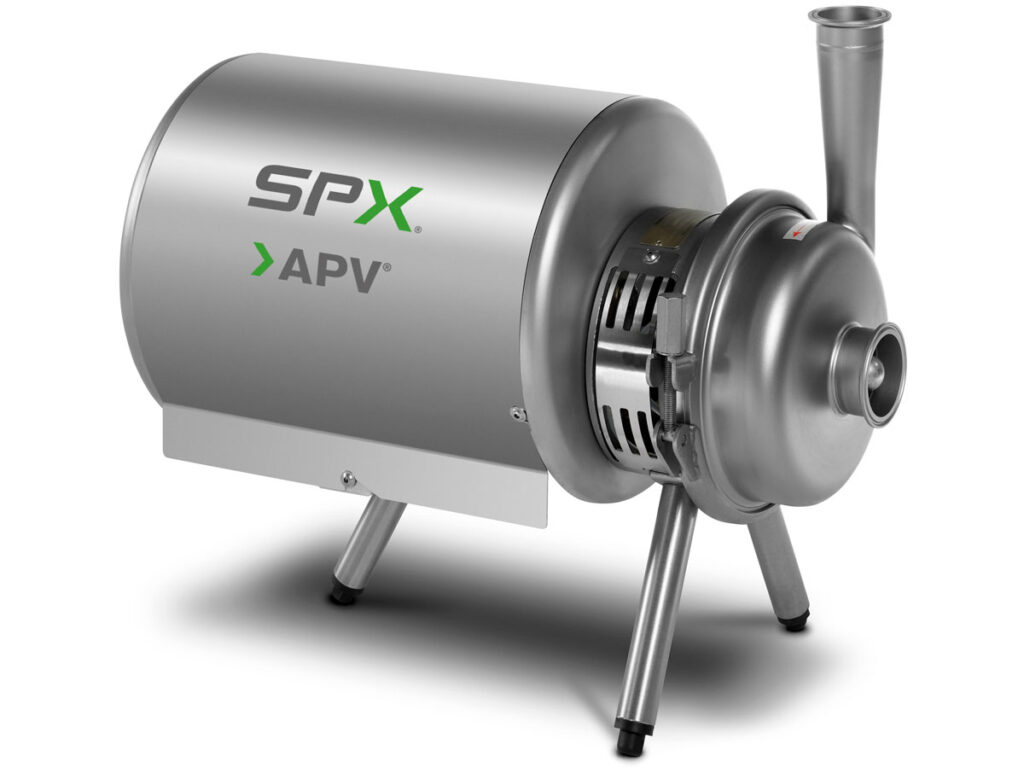
Centrifugal & process pumps

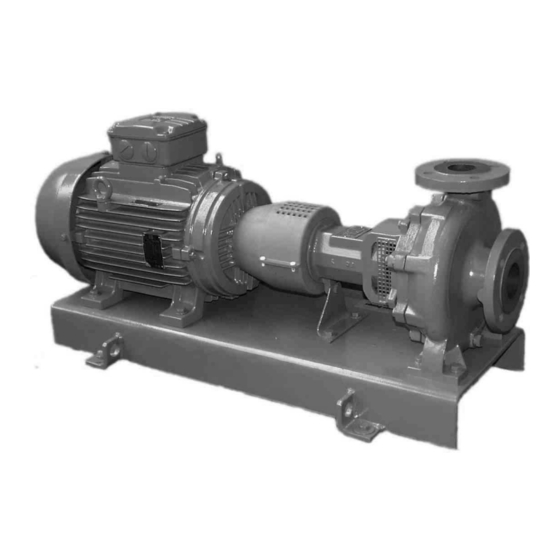
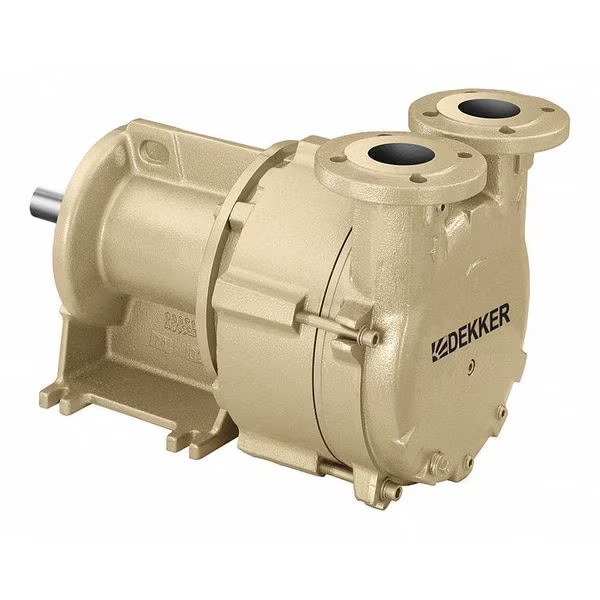
Vacuum pumps

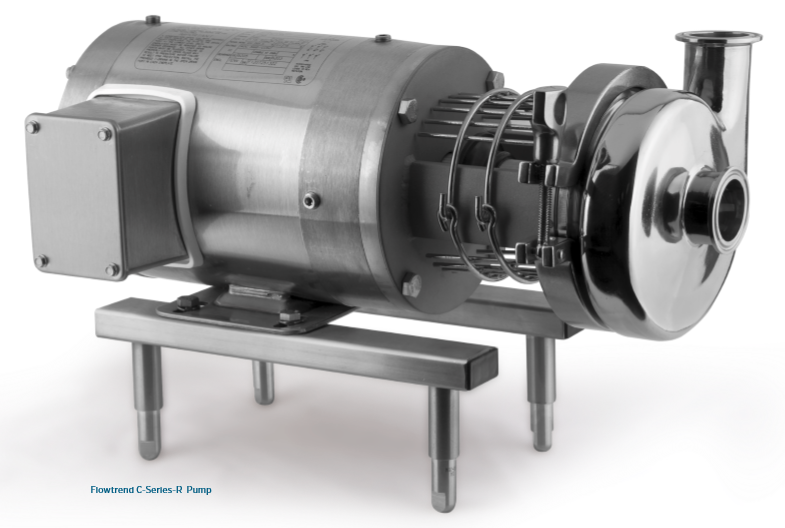
Sanitary pumps

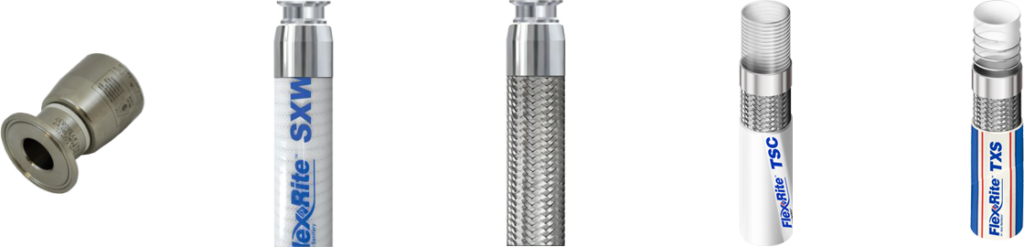
Sanitary fluid handling
Sanitary process systems

Heat pumps

Filtration & pumping systems