
COMPRESSED AIR & PROCESS EQUIPMENT
Rentals
Temporary equipment can help bridge a planned outage, an extended repair or a change in production demand. Fluid Flow helps review rental requirements around the equipment duty, requested duration and site conditions, then confirms the options available for your facility.
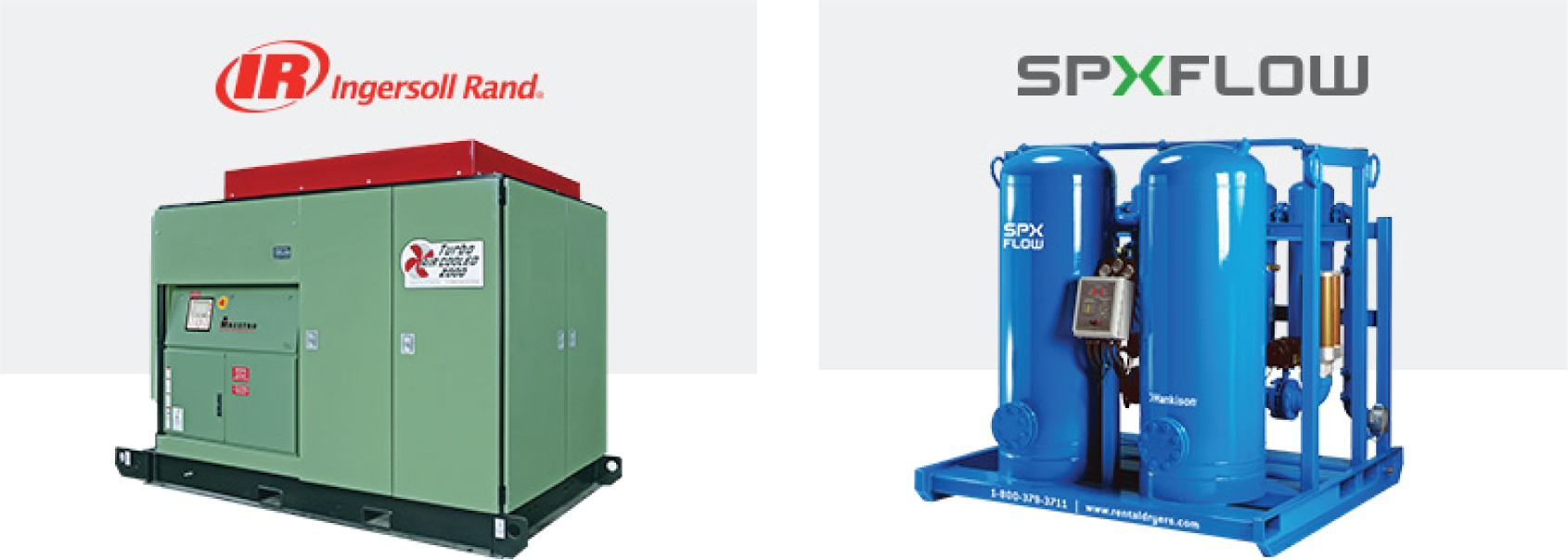
START WITH YOUR APPLICATION
Temporary equipment for the demand you need to cover
Fluid Flow supports temporary compressed-air requirements through short-term, long-term and rent-to-own arrangements. Rentals can bridge planned maintenance, an equipment repair or a change in production demand.
Define the essential flow, pressure and air quality, the expected duration and the site conditions. The team can then review compressors, dryers and supporting equipment that fit the application and confirm availability.
Planned maintenance
Identify the equipment being removed from service and the demand that remains. Coordinate the temporary connection and startup before the maintenance window begins.
Unplanned equipment outage
Explain the affected production, available backup and current system condition. The team needs the required flow, pressure and air quality to review a suitable temporary option.
Changing production capacity
Describe the added load and expected duration. Compare the temporary requirement with the long-term plan so the rental arrangement supports the intended transition.
Plan temporary air
before the outage
Equipment, treatment and connections in one scope

Tackle Common Compressed
Air Issues
Explore practical guidance for compressed-air planning and system performance.

Handle Air Flow and
Pressure Modulation Needs
Explore practical guidance for compressed-air planning and system performance.
Why Choose Fluid Flow for Your Rental Service?
Our rental equipment is designed for ease in transportation,
installation, commissioning and operation to significantly reduce the stress and downtime
that results from an unexpected compressed air equipment issue.
Delivery planning
Confirm equipment availability, transport and delivery timing for your facility.
Installation coordination
Review utilities, access, connections and startup responsibilities before equipment arrives.
Air quality for the application
Confirm the selected compressor, treatment equipment and documented air-quality requirements for the point of use.
Dedicated Service Network
Coordinate the repair and temporary-equipment scope with the regional service team. Lead times depend on equipment condition, required work and availability.
Operating performance
Match compressor controls and capacity to the load profile. Energy use depends on the selected equipment and actual operating conditions.
MAKE THE NEXT STEP CLEAR
Plan the complete temporary air supply
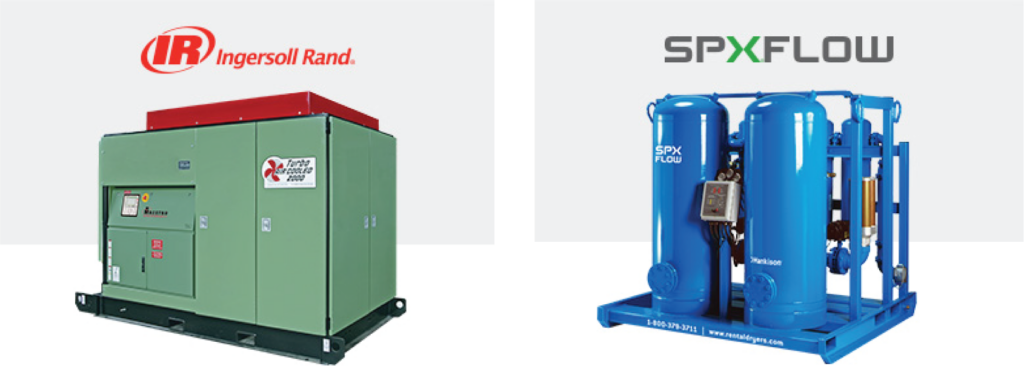
A compressor does not automatically provide a complete temporary air supply. Drying, filtration, condensate management and connection arrangements need to suit the application. Existing treatment equipment may be usable only after capacity and operating conditions are reviewed.
Define the temporary supply requirement
- Normal and peak demand at the required operating pressure.
- Air-quality requirements and treatment equipment needed.
- Operating hours, requested start date and anticipated duration.
- Available utilities, placement space and access restrictions.
- Connection details and installation responsibilities.
COORDINATE THE WORK
Confirm scope before committing the outage schedule
Agree who will coordinate delivery, connections, operation, service and equipment return. Include the transition to temporary air and the return to the permanent system in the work schedule.
Availability and timing depend on the required duty and location. Use the rental planning guide to gather the information for a complete review.
Rental equipment is designed for ease of transportation, installation, commissioning and operation. Discuss the engineered system and supporting equipment needed for your application with a Fluid Flow rental specialist.
USEFUL ANSWERS
Compressed air rental questions
When is Compressed Air Rental the Best Option?
– Unexpected equipment failure
– Productivity optimization
– Capital budget constraints
– Spikes in demand
– Scheduled maintenance
Do all rental requests need air treatment?
Treatment depends on the application’s quality requirement and the proposed supply. Include the requirement so the complete arrangement can be reviewed.
Can a rental support a planned equipment replacement?
A temporary arrangement can be discussed around the replacement schedule, required operating duty and site constraints. Confirm availability and the complete scope before relying on it.
CONNECTED SUPPORT
Keep the next step connected.
FLUID FLOW APPLICATION SUPPORT
Review your temporary equipment requirement
Share the duty, facility location, timing and expected duration.