
Compressed-air treatment
Hankison Air Dryers & Filters
Wet compressed air, filter pressure loss and changing production demand call for a treatment review built around the application. Explore Hankison refrigerated and desiccant dryers, compressed-air filters and condensate-management options with Fluid Flow.
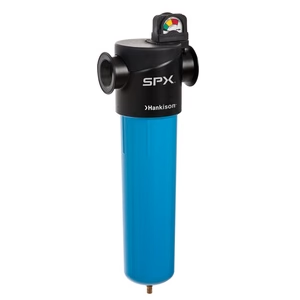
Compressed-air dryers
Define the required pressure dew point and actual inlet conditions before comparing dryer technologies.
Refrigerated air dryers
Review refrigerated drying where its delivered dew point meets the process and installation requirements. Compare cycling and non-cycling designs against the operating schedule.
- Refrigerated drying options
- Demand and inlet-condition review
- Condensate removal requirements
Heatless desiccant dryers
Evaluate heatless regenerative designs when the process requires drier air than refrigerated drying can provide. Account for regeneration air in the system demand.
- HHX and HHE product families
- Pressure-dew-point requirement
- Purge and control considerations
Heated & blower-purge desiccant dryers
Compare HPD heated-purge and HBP blower-purge families when evaluating regeneration arrangements for the application.
- Heated and blower-purge options
- Utility and energy-use review
- Duty and installation requirements
Filters & condensate management
Pair drying with the filter and drainage duties that protect the process.
NGF & HF compressed-air filters
Review filter grade, operating flow and contaminant removal together. Include clean and operating differential pressure when replacing existing equipment.
- NGF and HF product families
- Filter-grade and housing selection
- Maintenance and drainage access
Condensate-management options
Include collection and drainage in the treatment arrangement so separated liquid is removed from the system.
- Drainage-system review
- Operating and maintenance requirements
- Coordination with dryers and filters
Start with your operating requirements.
State the air-quality requirement
Provide the required pressure dew point and particle or oil requirements at each critical point of use. Include the lowest ambient temperature along the distribution route.
Use actual inlet conditions
Share normal and peak flow, minimum operating pressure, inlet temperature and ambient conditions. Nominal compressor capacity alone is not a complete dryer specification.
Review regeneration and drainage
Account for purge demand or electrical utilities, filter pressure loss and condensate handling. Include service access and how production will be supported during maintenance.
Product resources
Frequently asked questions
Consider it when the required pressure dew point is below what a refrigerated dryer can deliver, including applications with low-temperature exposure. Confirm the selected configuration against the operating conditions.
Drying controls moisture vapor. Filtration addresses specified particles or liquid aerosols, and drains remove separated liquid. The treatment stages must work together to meet the process requirement.
Horsepower is not enough. Review actual flow, pressure, inlet temperature, ambient conditions and the required dew point, then apply the manufacturer’s selection guidance.
Contact your local Fluid Flow team to confirm product availability and options for your facility.
Find the right solution for your application.
Share your operating requirements, current equipment and facility location.