
COMPRESSED AIR & GAS
Mikropor Air Dryers, Filtration & Gas Generation
Dry air, contaminant control and gas purity are connected system requirements. Mikropor offers refrigerated and desiccant drying, compressed-air filtration and on-site gas generation. Fluid Flow helps define the required air or gas quality, operating conditions and supporting equipment before the system is selected.

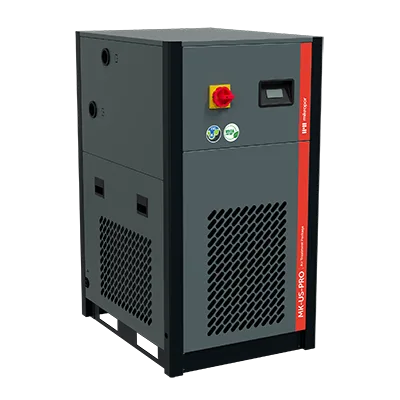
Drying and compressed-air treatment
Specify moisture and contaminant limits at the point of use, then evaluate the treatment train.
Refrigerated air dryers
Remove moisture for applications that can use a refrigerated-drying approach.
- Digital cycling and other refrigerated families
- High-temperature and high-pressure family references
- Review inlet and ambient conditions
Desiccant air dryers
Achieve a lower pressure dew point where the process or downstream temperature requires it.
- Modular desiccant product families
- Pneumatic MMD-P configuration information
- Include regeneration and filtration in selection
Compressed-air filtration
Address contaminants as part of a coordinated air-treatment arrangement.
- Compressed-air filtration product range
- Coordinate filters with dryer and point of use
- Specify contaminants and acceptable pressure drop
On-site gas generation
Define gas flow, purity and pressure together; the compressed-air feed is part of the project.
PSA nitrogen generators
Generate nitrogen from prepared compressed air for process demand.
- Pressure swing adsorption technology
- Modular nitrogen generator information
- Match purity, flow and feed-air requirements
PSA oxygen generators
Review on-site oxygen generation for a defined industrial process requirement.
- Pressure swing adsorption approach
- MOG family product information
- Confirm intended use and complete system specification
Start with your operating requirements.
Define the quality target
Specify pressure dew point and contaminant limits for compressed air, or required purity for generated gas. Use the process requirement rather than a general 'clean air' description.
Include operating conditions
Provide flow, pressure, inlet temperature and ambient conditions. For gas generation, include peak consumption and storage requirements.
Review the supporting system
Dryers, filtration, receivers and controls affect generator and process performance. Include feed-air capacity and maintenance access in the project review.
Frequently asked questions
Start with the required pressure dew point and the lowest downstream temperature. Then compare inlet conditions, flow and regeneration or refrigeration requirements.
Required gas purity, delivery pressure and consumption profile all matter. The feed-air quality and compressor capacity must also support the selected generator.
No. Confirm flow, pressure, contaminant-removal requirement, element type and acceptable pressure drop as well as connection size.
Related products and support
Compressed air audits
Understand demand, pressure losses and operating patterns before changing equipment.
Service, repair & rentals
Explore support for equipment condition, planned maintenance and temporary capacity.
Air treatment and distribution
Connect the compressor selection with drying, filtration, storage and piping.
Contact your local Fluid Flow team to confirm product availability and options for your facility.
Find the right solution for your application.
Share your operating requirements, current equipment and facility location.