
COMPRESSED AIR SYSTEM PERFORMANCE
Compressed Air Audits
Before buying more compressor capacity or changing operating pressure, establish what the existing system is doing. Fluid Flow compressed-air audits review operating conditions and system demand to help identify practical improvement opportunities based on the facility’s measured performance.

START WITH YOUR APPLICATION
Find the cause before adding capacity
Compressed Air is often considered the fourth utility and stands as a significant energy consumer in your plant. Despite its widespread use across various manufacturing sectors, compressed air remains the most misunderstood utility, presenting a key opportunity for cost reductions. Fortunately, a professional air audit can uncover potential cost-saving opportunities and contribute to the establishment of a more efficient operation.
When it comes to improving air system operation and efficiency, there is no ‘one size fits all’ solution. At Fluid Flow, we perform thorough system audits by evaluating the condition, operation, and maintenance of existing equipment and how well it currently functions in support of the entire demand requirement.
Low pressure, moisture at the point of use and rising energy use can involve more than the compressor. A compressed-air audit connects operating measurements with production demand to help distinguish maintenance issues, distribution losses and capacity requirements.
Define the decision first: restore reliable pressure, investigate air quality, plan an expansion or compare equipment options. That objective determines the system boundary and operating conditions the review should capture.
Generation and controls
Review the operating pattern of the compressors and how they respond to changing demand. Equipment running hours and control behavior help provide context for the measured air and energy requirements.
Treatment and distribution
Consider dryers, filters, storage, piping and points of use. Restrictions and changing conditions elsewhere in the system can affect what reaches production.
Demand and operating schedule
Relate observations to shifts, production cycles and nonproduction periods. The pattern of demand is often as important to an equipment decision as the peak requirement.
MAKE THE NEXT STEP CLEAR
Measure the system. Prioritize the work.
Compressors, controls, storage, dryers, filters and distribution piping operate as one system. A restriction, leak or mismatch between supply and demand can affect what reaches production even when individual components are running.
Fluid Flow evaluates equipment condition, operation and maintenance in the context of total system demand. Flow rates, energy use and operating pressure help identify where equipment choices, system layout, controls, storage or maintenance practices may be affecting performance.
The objective is to identify practical opportunities to reduce energy and repair costs, improve reliability and productivity, and minimize downtime. Recommendations depend on the operating data and the needs of the facility.
Prepare the information that makes measurements useful
Equipment data should be interpreted alongside actual plant operation. A record of production changes and known problems helps the review distinguish a normal cycle from an unusual event.
- Compressor, dryer and major supporting-equipment information.
- Available flow, pressure, power or operating-history records.
- Production schedules and planned capacity changes.
- Locations and timing of pressure or air-quality complaints.
- Existing piping information and known maintenance concerns.
Why Have A Compressed Air Audit?
- Identify energy and repair-cost opportunities.
- Review pressure, quality and reliability concerns.
- Prioritize maintenance, control and equipment changes.
- Compare options using a measured baseline.
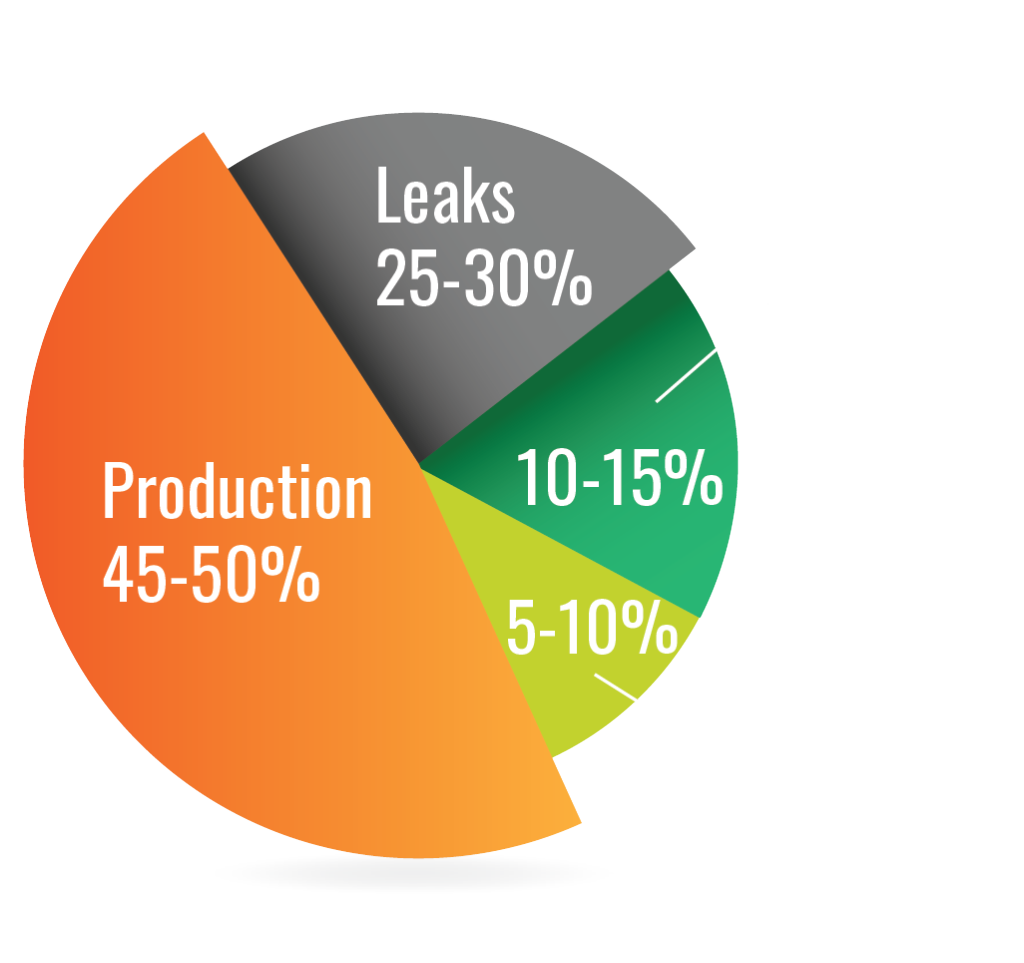
Use measured performance to evaluate compressed-air costs
An air audit connects flow, operating pressure and energy measurements with the production schedule. The findings can identify leaks, control issues, pressure losses or mismatched capacity.
Any savings estimate should state the measured baseline, operating assumptions and proposed changes. Results vary with the facility and the work implemented.
Get a Compressed Air Audit With Fluid Flow
Most manufacturing facilities spend more money in operating and maintaining their compressed air systems than necessary. Most of these companies also suffer from poor compressed air quality, stemming from various historical and current poor practices. These can include inefficient equipment choices, poor system design and layout, inadequate maintenance practices, inefficient compressor controls, insufficient storage, and more.
Fluid Flow’s seasoned technicians have the expertise to perform a comprehensive compressed air audit, leveraging collected data to propose cost-saving options. Contact us today to schedule your air audit.
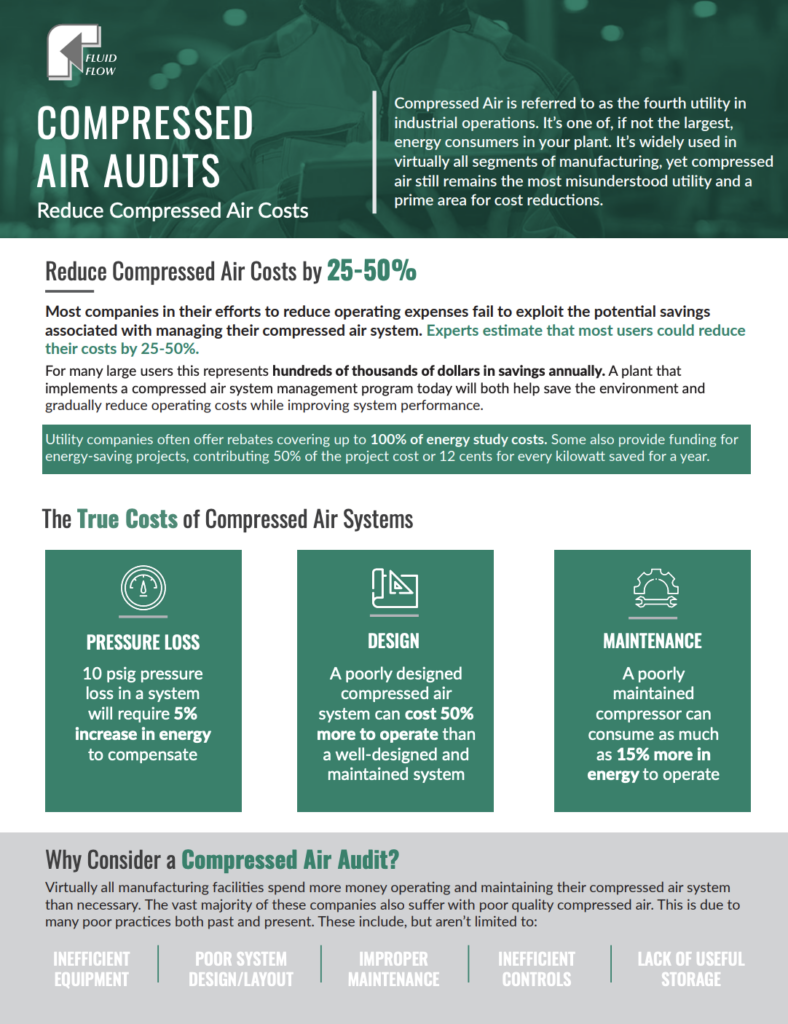
Check utility incentives before starting
Some utilities offer incentives for energy studies or efficiency projects. Eligibility, funding and preapproval requirements vary by utility and program. Confirm the current terms for your facility before commissioning a study or purchasing equipment.
COORDINATE THE WORK
Turn findings into a practical work sequence
Separate the findings into maintenance work, operating or control changes and potential equipment projects. For each recommendation, identify the problem addressed, the implementation needs and the measurement that will show whether it helped.
Where energy or cost estimates are included, keep the measured baseline and operating assumptions with the recommendation. This makes alternatives easier to compare and follow-up results easier to assess.
USEFUL ANSWERS
Compressed air audit questions
Does an audit always lead to a new compressor?
No. The review may identify maintenance, treatment, storage, controls or distribution issues that should be addressed before adding capacity.
Should the system be observed during normal production?
The measurement plan should represent the operating conditions relevant to the decision. Include changing loads or shifts when they affect performance.
Could utility incentives help with an audit or improvement project?
Ask your utility about available energy-study and efficiency-project incentives before defining the scope. Availability, eligibility and funding vary by utility and program; confirm the requirements for your facility.
CONNECTED SUPPORT
Keep the next step connected.
FLUID FLOW APPLICATION SUPPORT
Define the question behind your air-system review
Share the performance concern and the production conditions the assessment needs to capture.